7 Reasons Your Hair Feels Thinner After 50 (and What Actually Helps)
If your ponytail feels smaller than it used to, you are not imagining it. Here are the seven most common reasons, and the simple changes that make a real difference.

If your ponytail feels smaller than it used to, you're not imagining it, and you're definitely not alone. Most women notice their hair changing somewhere between 45 and 60. The good news: most of the reasons are well understood, and several of them are things you can do something about starting with your next wash.
Here are the seven we hear about most, in plain language.
1Hormones are shifting
Estrogen helps keep hair in its growing phase for longer. As levels drop around menopause, more hairs move into the resting phase sooner, and each strand has less time to reach its full length. The result isn't usually bald spots. It's an overall "less of it" feeling, especially at the crown and part.
2Strands are getting finer
It's not only about the number of hairs. Many women find each strand gets a little thinner over time, so the same number of hairs simply takes up less space. Fine hair also breaks more easily, which brings us to the next one.
3You're losing length to breakage
This is the one most people miss. Hair can grow perfectly well at the root and still snap off halfway down from brushing, heat and color. Over months, that breakage makes hair look thinner at the ends, even when the roots are doing their job.
Growing hair is only half of it. Keeping the hair you grow is the other half.
4Your scalp has buildup
Oil, dry shampoo, styling products and hard water all collect around the roots. A scalp that feels heavy or itchy is not a comfortable place for hair to grow from. Many women over 50 also wash less often than they used to, which gives buildup more time to settle in.
5Color and heat add up
Years of coloring, blow-drying and flat irons weaken the outer layer of the strand. You may not notice it on any single day, but it shows up as frizz, dullness and ends that split and break.
6Stress, sleep and diet
A stressful season, a big change in diet, or months of poor sleep can all show up in your hair a few months later. Hair is a slow messenger: what you see today often reflects what happened two or three months ago.
7Something else is going on
Thyroid changes, low iron and some medications can all affect hair. If your hair loss is sudden, patchy, or comes with other symptoms, please talk to your doctor or a dermatologist. A shampoo is not the answer to that, and nobody should tell you it is.
What actually helps
For the everyday kind of thinning most of us notice, the basics matter more than any miracle:
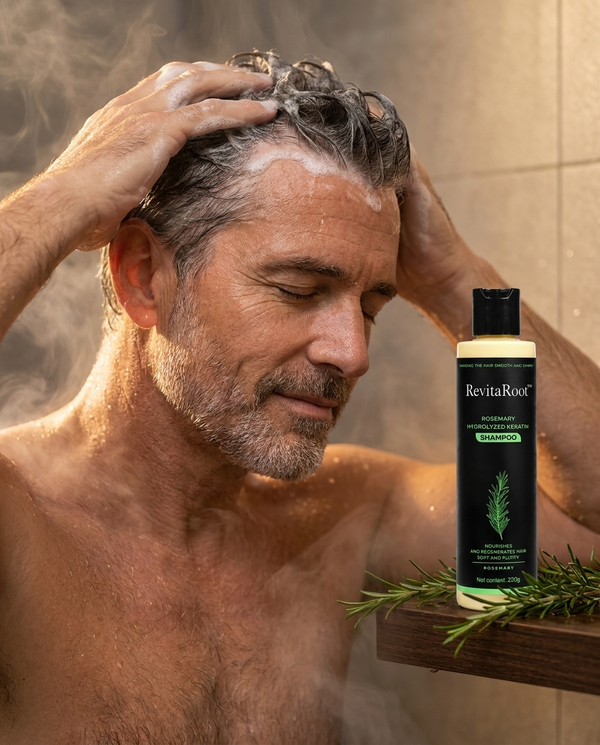
- Treat your scalp, not just your hair. Spend a full minute massaging shampoo into the roots instead of rinsing after ten seconds.
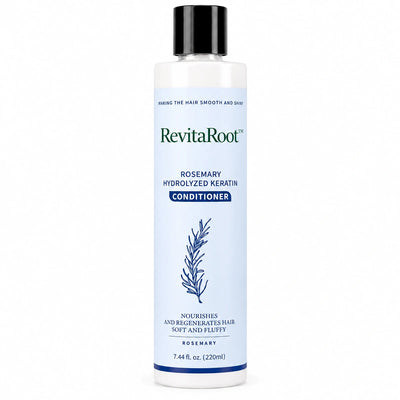
- Protect your length. Condition the mid-lengths and ends, detangle gently from the bottom up, and turn the heat down.
- Be consistent. Hair grows about half an inch a month. Give any routine at least two to three months before you judge it.
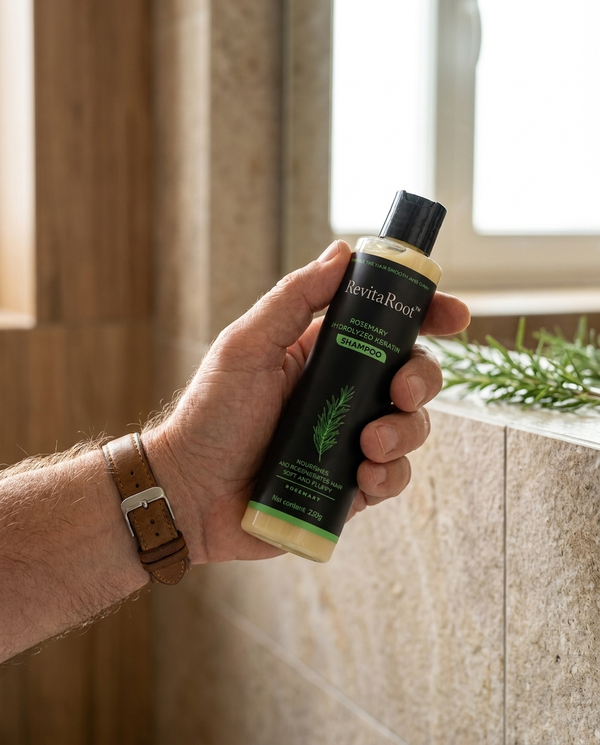
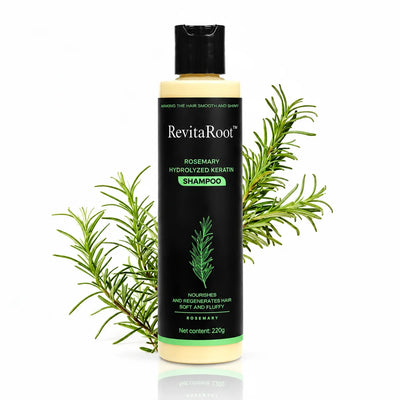
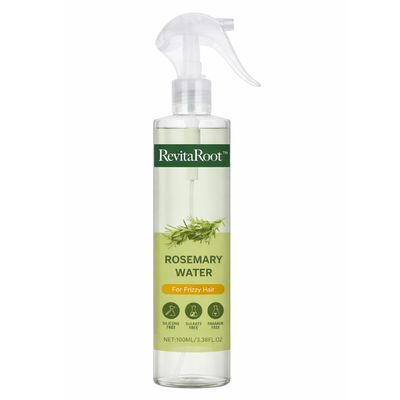
- Choose ingredients with a reason behind them. Rosemary has a long history in hair care and some interesting research behind it, which is why we built RevitaRoot around it.
None of this is complicated. It's simply about giving your scalp a cleaner start and your strands a better chance of staying with you. Here's the 60-second routine we recommend.
This article is for general information only and is not medical advice. RevitaRoot products are cosmetics and are not intended to diagnose, treat, cure or prevent any disease. If you notice sudden or patchy hair loss, talk to a doctor or dermatologist.
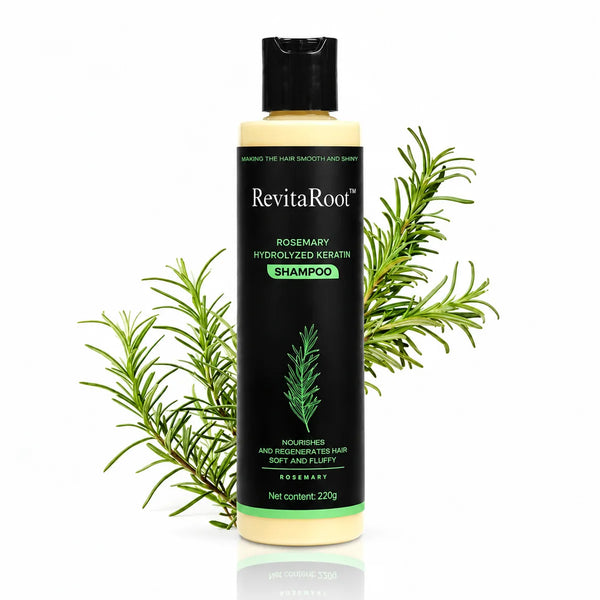
Try it on your next wash
Your Hair Grows Either Way.
Keep More of It.
- Rosemary + hydrolyzed keratin
- One minute at the roots, every wash
- 30-day money-back guarantee